
When 327 students walked into Clarks Amer, Jaipur on June 6, 2026, they weren’t heading to an examination hall. They were stepping into the professional world.
That distinction — subtle but significant — defines everything about STAMBH & TURPAN 2026, the flagship annual confluence of Design and Architecture programs hosted by Vivekananda Global University’s Centre for Design Excellence (CODE). In a single, immersive day, the event collapsed the distance between campus and career, between student work and market reality, between creative potential and professional validation.
Where Portfolios Become Proof
The morning of STAMBH & TURPAN 2026 belonged to accountability. Forty-two parallel open juries ran simultaneously — each one a live arena where graduating students presented, defended, and stood behind the thinking embedded in their final-year thesis projects. Over 327 students participated, not in front of internal examiners with pre-loaded rubrics, but before 150+ industry practitioners: architects, communication designers, planners, product innovators, and creative entrepreneurs drawn from across the country.
This is the anatomy of a portfolio review done right. Alongside the juries, placement conversations unfolded in real time — portfolio walk-throughs with active recruiters, not simulated HR interactions. The event’s Creative Placement Drive formalized this bridge, surfacing 150+ creative job roles spanning architecture, product development, communication design, fashion, planning, and emerging digital sectors. India’s design job market in 2026 spans hiring by firms including tech giants, urban design studios, retail majors, and consulting practices — and VGU brought that entire landscape into one room.
The Products Were Real. So Were the Sales.
If the jury sessions represented intellectual validation, the afternoon was market validation. Product Design students curated what can only be described as a live proof-of-concept: a student-run flea market presenting nearly 180 self-developed products. Multi-use jewellery organisers, ergonomic laptop stands, resin lamps, sustainable home textiles, handcrafted incense holders — and culturally rooted innovations like Bharat Battle and Guess The God card games that speak directly to India’s growing appetite for homegrown creative products.
This is pedagogy that earns its keep. Students didn’t just design these products in studios — they manufactured, priced, marketed, and sold them to real buyers in a live commercial setting. That’s the kind of feedback loop that no classroom simulation can replicate.
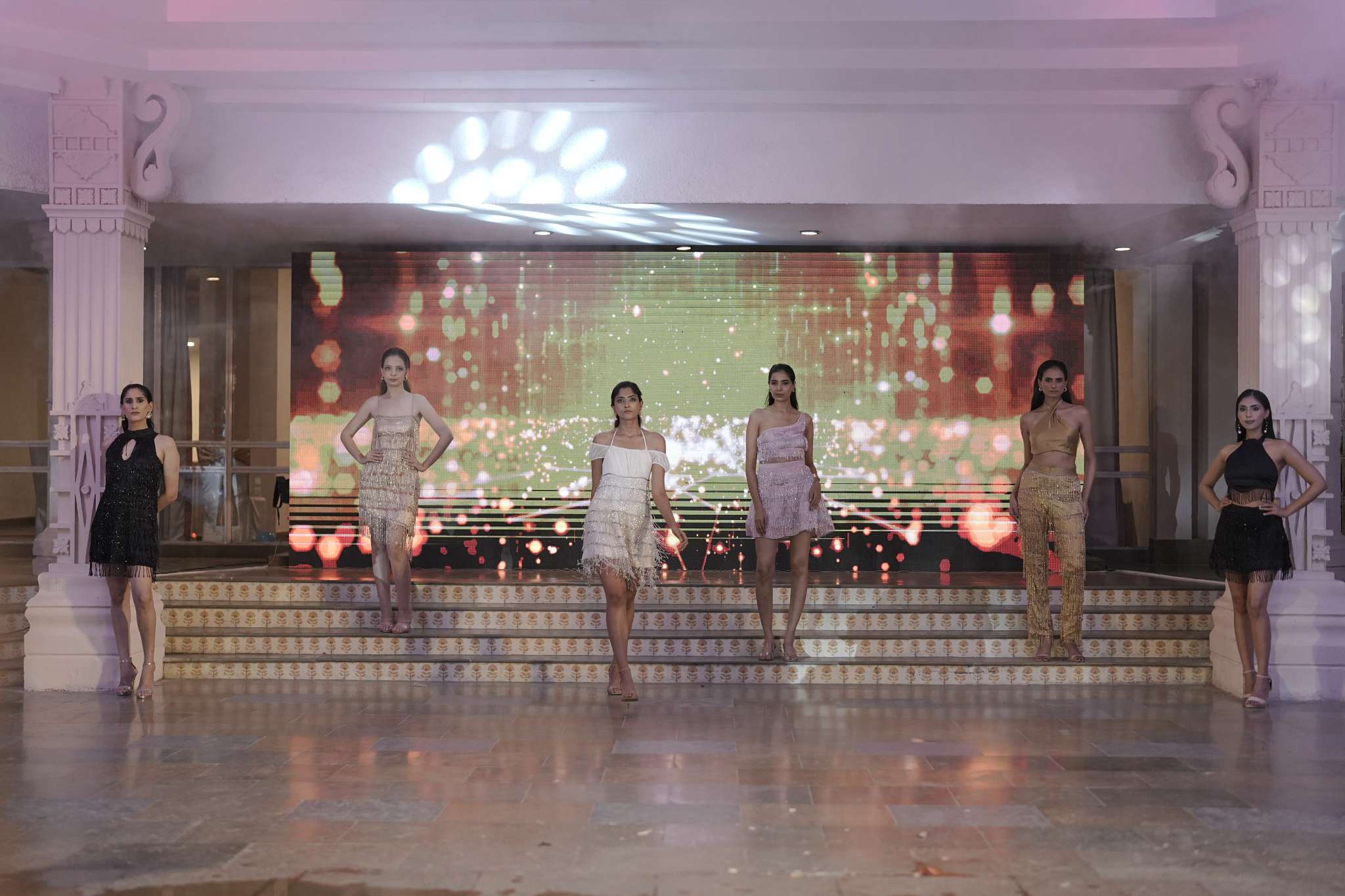
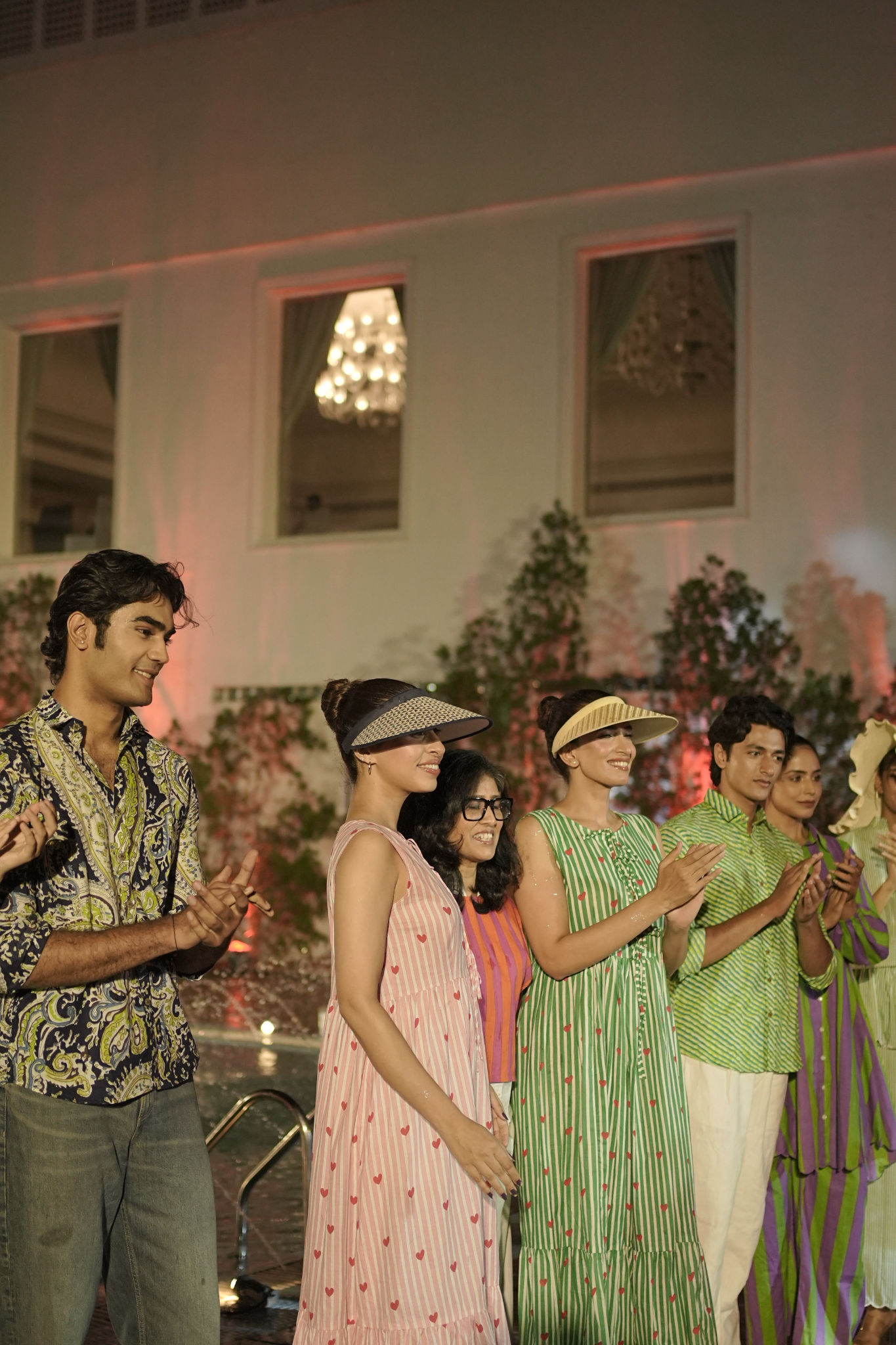
Architecture students presented 100-bedded hospital infrastructure concepts — responding to the genuine demands of future healthcare architecture in India. Fashion and Textile students closed the evening with a professional runway showcase of student-designed collections calibrated for both creative distinction and commercial viability.
Industry Didn’t Just Attend — It Invested
The quality of STAMBH & TURPAN 2026’s jury panel sets it apart from the usual academic review cycle. Philip Thomas, Country Head – India at the World Design Council, brought with him over three decades of expertise bridging media, design education, and industry skill development — a lens shaped by his work advancing future-ready creative learning across Indian institutions. Transportation Designer and educator Sunil Verma, alongside Rashmi Bhardwaj of NID Ahmedabad, brought practitioner perspectives that pushed student work beyond academic norms. Ritvik Yadav, Founder & CEO of Khageshvara Aviation Technology, represented exactly the kind of entrepreneurial, cross-sector thinking that defines where India’s creative economy is heading.
These weren’t honorary presences. They were active evaluators, mentors, and potential employers — participants who invested hours in the genuine assessment of young talent solving real-world problems through design.
What VGU Is Actually Building
India needs over 60,000 designers by 2026 across product, automotive, digital media, fashion, and interiors, according to CII’s India Design Report. That demand can’t be met by institutions that still treat design education as a preparation for the industry encounter — rather than the industry encounter itself.
STAMBH & TURPAN 2026 is VGU’s answer to that challenge. CODE’s programmes — from B.Des in Fashion & Textile, Interior & Product, and UX Design, to B.Arch and M.Des tracks — are built on a pedagogy where students create, test, defend, market, and engage with industry as a continuous practice, not a final-semester event.
The event didn’t just showcase student work. It showcased a university that understands what future-ready creative education must look like — and is already building it
